
Fields in Adams County Property Tax Records
Tax data in Adams County lives in several places. Parcel information, assessment references, and Treasurer bill data each hold part of the record. No single screen gathers every field. Treat any field list as a checklist of items to locate and confirm across sources rather than one promised view. The bill governs. It sets the tax year, amount, installment terms, and payment destination for its period.
| Field | What It Shows | Where |
|---|---|---|
| Assessed value | Assessment figure associated with the parcel and tax year | County parcel system and assessment record |
| Land and improvements | Separate value components where shown | Parcel or assessment record |
| Tax bill | Amount due and payment instructions for the year | Treasurer bill lookup and printed bill |
| Payment status | Paid, balance due, or delinquency details shown by the service | Treasurer |
| Exemption or credit | Field shown for the parcel; confirm program rules separately | Assessment and tax records |
An assessed value has one job. It exists for taxation under Wisconsin's assessment system, not as an offer price or an appraisal of what a buyer would pay today. A last sale price is different. It records one transaction at a moment in time. A bill instead reflects its own tax year and the taxing rules then in force. Keep those figures separate whenever you weigh Adams County property tax records against a sale or an assessment appeal.
When Adams County Property Tax Information Appears
Fresh tax numbers arrive on a schedule. The Adams County Treasurer posts initial real-estate tax information online in mid-to-late December. Anything older may lag. A saved page from an earlier date can miss the latest bill or payment state, so confirm the tax year and parcel ID before treating an online result as current. Trust the paper bill for deadlines. The Treasurer's site gathers the pieces. Through the Adams County Treasurer page, you reach tax-bill lookup, payment information, and tax-deeded-property material in one place.
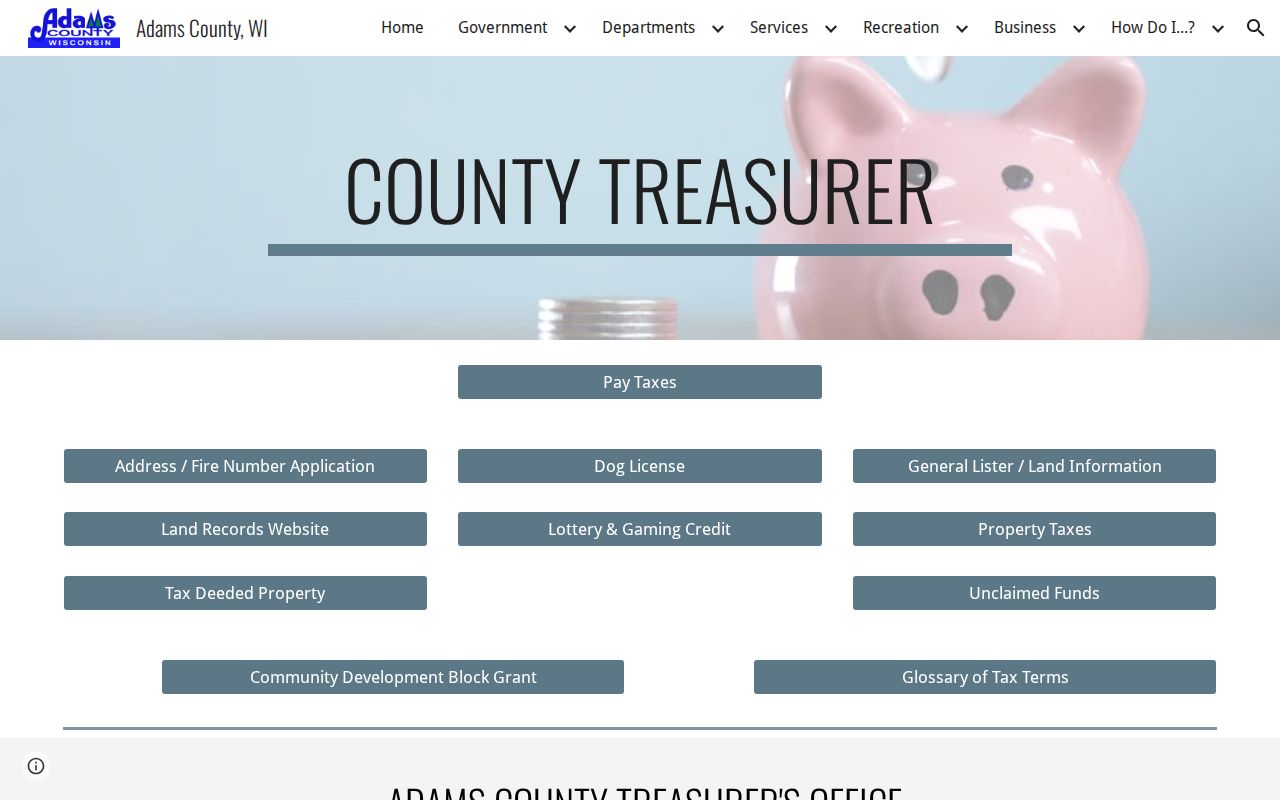
Deadlines leave no room for guesswork. If the live lookup and the bill disagree on a balance or due date, contact the Adams County Treasurer and settle the question before it costs you.
Adams County Second-Installment Property Tax Bills
Some Wisconsin real-estate bills allow installment payments. Where a bill uses that schedule, Wis. Stat. §74.11(2)(b) fixes July 31 as the second-installment due date. Check the actual Adams County bill. It shows whether the parcel uses that schedule, where payment must go, and which office handles it.
A general calendar can mislead. Skip it when a parcel has a special status or the printed notice gives a specific direction. The records serve distinct purposes. The parcel record identifies the property, the bill states the charge and terms, and the receipt documents a payment. Keep the tax year and parcel ID with correspondence.
State law also governs remittance. If the destination is unclear, follow the bill and ask the listed collecting office before sending funds.
Adams County Property Tax Delinquency and Tax-Deed Records
Delinquency is its own phase. The Adams County Treasurer handles delinquent real-estate taxes and tax-deed applications, a later stage than an ordinary current-year bill. Read any delinquency entry closely. It should carry the tax year, parcel, balance, and current status. An application is not proof. A tax-deed application does not establish that ownership has already transferred.
Distressed parcels demand two stops. Start with the Adams County Treasurer's tax information to understand the account, then turn to the Register of Deeds to inspect any recorded instrument. Never infer the outcome from an application, a map label, or an old balance alone. Ask the Treasurer which stage the account has reached. Then check the deed index before deciding anything about title.
Look Up an Adams County Property Tax Bill
The Land Records landing page is the hub. It links the county's tax parcel system and the Adams County Treasurer's bill resources in one place. A parcel ID is the best search key. If you start from a street address, confirm the municipality and parcel before opening the bill. The public page describes address, parcel ID, and municipality search choices, but offers no complete live tax-result form or payment route. Confirm those on the bill itself.
- Open Adams County Land Records or Treasurer link and choose the correct tax year.
- Search by parcel ID or locate the parcel by address and municipality.
- Compare the displayed tax amount and status with the official bill.
- Read the installment and remittance instructions on that bill.
- Contact the Treasurer about an unclear balance, delinquency, or tax-deed application.
- Assessed value
- The assessment figure used as part of the property-tax calculation.
- Levy
- The amount raised by a taxing authority; the bill reflects the rules applied to the parcel.
- Tax credit
- A credit shown under the applicable program; verify eligibility and application rules with the proper office.
- Delinquent tax
- An unpaid real-estate tax balance handled through the Treasurer’s collection process.
Where Adams County Property Tax Payments Must Go
Payment has a legal path. Wis. Stat. §74.69 governs how property taxes are collected and remitted. A county website can link tax data without being the right destination for your payment. Follow the collector. Follow the printed mailing instructions for your parcel and installment. The online screen and the paper notice may point to different places. In that case, contact the Adams County collecting office named on the current bill before paying.
Paperwork pays off later. Keep the bill, the payment confirmation, and any written reply. Ask the Adams County Treasurer to research an account. Include the parcel ID and tax year. That way the office can separate the current year from older balances on the same parcel.
Adams County Assessed Value and Market Level
Wisconsin’s Property Assessment Manual lays out how local assessment connects to market evidence. An assessed value is a tax figure. A market value estimates what a property would bring in exchange. The two numbers answer different questions. Adams County’s last revaluation year and current assessment ratio are not settled here. So treat any statewide ratio with caution. Rely on the DOR manual. Use the Adams County assessment notice for the parcel’s year instead.
A shift in land or improvement values can change the assessment record. It may not produce a matching one-for-one change in the tax bill. The final bill also reflects the taxing authorities involved and the levy they set. A property tax record shows how the public calculation was made. A sale comparison or appraisal, by contrast, answers a different question about worth. For a closer look at value types, see the Adams County property value guide.
Adams County Open Book and Board of Review
An owner in Adams County who disagrees with an assessment has a formal path. Wisconsin's Board of Review hears those objections. The Department of Revenue publishes the calendars, forms, and owner materials that govern the process. For Adams County, the relevant filings include the objection form PA-115A, the PA-813 waiver form, and a 48-hour notice requirement. Confirm the current notice, calendar, and instructions before filing. Deadlines shift with the local meeting and the type of objection.
Prepare the record before any appeal. Identify the parcel and the assessment year. Keep the notice. Gather evidence tied to the value date and the property's characteristics, since a general complaint about the tax amount is not the same as a claim that the assessment is inaccurate. A payment balance or credit dispute belongs with the Treasurer, not the Board of Review. Mixing those issues only slows the objection down.
The Wisconsin DOR Board of Review filing guidance displays the PA-115A, the PA-813, and the notice instructions an owner needs.
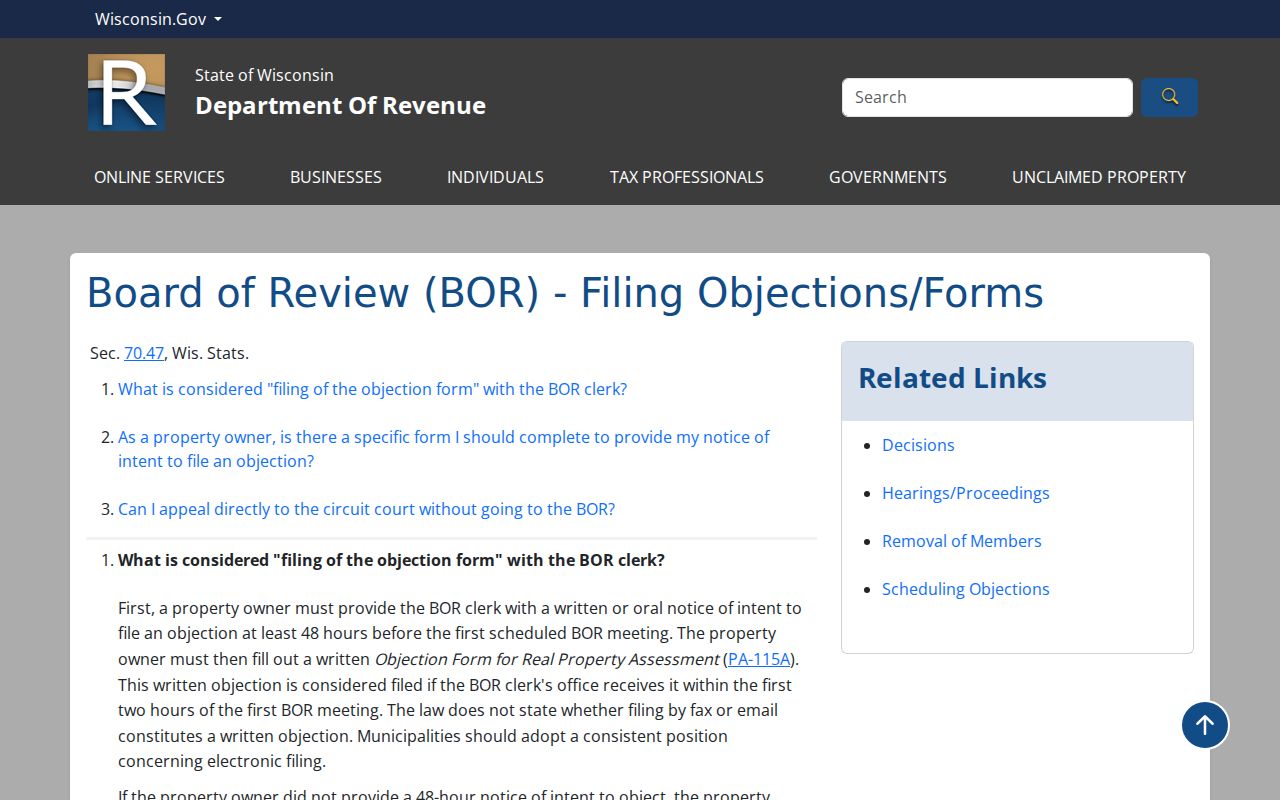
Verify the filing window with current DOR and local notices before sending any objection.
Contest an Adams County Assessment With the Right Record
An appeal targets the assessment record itself. A tax bill that simply feels high is not grounds. Check the Adams County notice for its review route and dates. Then follow the Wisconsin DOR Board of Review rules that govern the local proceeding. The state guidance names PA-115A and PA-813, along with a 48-hour notice step. Requirements change, so verify them. Rely not on an older form or a generic calendar.
Keep every piece of evidence tied to the parcel. The valuation period matters. So do the disputed characteristics. If the record needs correcting, ask the Adams County assessor or the responsible local office what documentation supports the change. A payment amount, installment, delinquency, or remittance question runs through the Adams County Treasurer instead. That process stays separate from an assessment objection.
Appeal window. Follow the date on the local notice and confirm the current Board of Review instructions. The state guidance includes a 48-hour notice requirement; a general description cannot replace the local filing calendar.