
Trace Adams County Former Owners Through the Deed Index
Start with the newest deed. Its grantor points you to the transfer before it. And so on back through the chain. Adams County publishes no complete coverage range for its online landing page. Confirm availability record by record and date by date. A separate pre-1975 index is linked there. Its title alone does not prove the exact start year for every book or instrument. Anchor the search with the legal description first. Then let historic maps and archives add context once the parcel itself is settled.
| Source | Years It Covers | Where Held | What It Shows |
|---|---|---|---|
| Modern deed search | Coverage not stated on the landing page | Register of Deeds links to Laredo and Tapestry | Search parties, descriptions, and recorded instruments |
| Pre 1975 Grantor / Grantee Index | Historical aid identified by its title | Register of Deeds historical menu | Older party-index route; confirm exact range |
| Card Index Files and Number Books | Coverage not stated | Register of Deeds linked files or office | Alternate paths to locate historic records |
| Plat books and maps | Catalog dates include 1855, 1856, 1900, and 1916 | Wisconsin Historical Society | Owner names, roads, farms, and subdivision context |
| Local-history archive | School and community material reaches into the 1850s | Adams County Historical Society | Context and volunteer research, not a deed index |
Check the current index for recent transfers. When the trail reaches older years, follow the linked historical aids for that period. A map may suggest a former owner or a subdivision name. Only a deed or plat, though, can connect that clue to the actual parcel. Adams County records show no courthouse fire or destroyed-record episode, so never blame a gap on a loss event without evidence.
Backtrack an Adams County Chain to Previous Owners
The backward method relies on two things: each deed's parties and its legal description. Record one transfer at a time. Stop the moment the description no longer describes the same land.
- Find the latest deed for the parcel and identify its grantee.
- Read the grantor and legal description on that instrument.
- Search the prior grantor as a grantee on an earlier Adams County deed.
- Compare the earlier description with the current parcel and note lot splits or changes.
- When the modern index ends, ask for the matching historical index, card, or number book.
- Grantor / grantee
- The party conveying an interest and the party receiving it.
- Chain of title
- The ordered set of transfers used to trace title through time.
- Legal description
- The land description that keeps an older search tied to the same parcel.
How Far Back Prior Owners Appear in Adams County Records
The Register of Deeds links its Pre 1975 Grantor / Grantee Index. But the landing page leaves two things open. It does not state the modern search's exact cutoff. It does not spell out the year coverage of every historical file. So treat "pre-1975" as a label, not a guarantee for every instrument type. Ask the office which resource covers your deed date. Ask whether the answer sits in a paper book, a card file, or a linked document.
For an old ownership question, bring the last deed reference you found. Bring the legal description, the names, and an approximate year. That lets staff point to the right series without combing an entire township. A deed book reference often beats a street address here. The street may not have existed when the earlier instrument was recorded.
Historic Maps for Finding Former Owners in Adams County
The 1855 Quincy map is cataloged as an owner-labeled map showing farms, hotels, roads, and a cemetery. The sheet also marks a dike. The Wisconsin Historical Society additionally catalogs an 1856 Point Bluff map. Its listing includes a 1916 county map. A family or place name may never appear in a modern address search. It can still surface on these sheets. They are clues to the next deed or plat, never proof of present ownership.
The 1900 Adams County atlas goes further, with township, village, city, and subdivision plates. Its catalog names Artist Glen Subdivision and Robinson's Subdivision of Lot 7. Search those terms in legal-description mode. Set the historic plate beside the current parcel map. A later CSM or subdivision instrument may explain how an older tract became today's lot. The Wisconsin Historical Society's digitized 1900 atlas shows its title page and plate thumbnails.
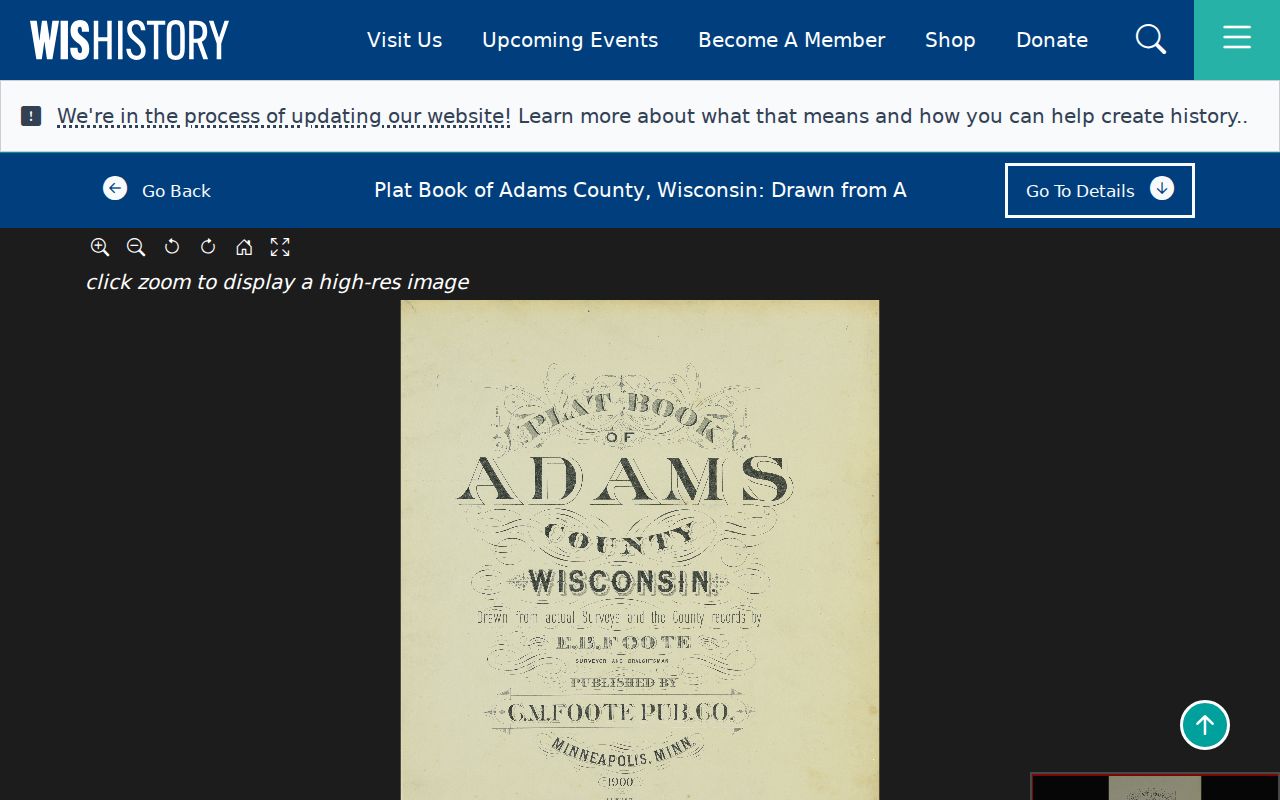
Treat each Adams County map name as a search phrase, then verify it against a recorded legal description.
Probate Transfers in an Adams County Ownership History
Not every link in a chain comes from a sale. An estate or court-related transfer can shift ownership just as cleanly. Wisconsin Circuit Court Access offers public case summaries. The Adams County Clerk of Court page links local probate information. A docket can locate the case. Confirming what happened to the parcel still takes a recorded deed or other land instrument.
When a prior owner died, compare the estate names, dates, and legal description. Then set them beside any later deed. Never assume a family relationship or a probate entry alone establishes who holds title now. Wisconsin DHS sets its own confidentiality and eligibility rules for vital-record certificates under Wis. Stat. §69.20.
For an Adams County estate transfer, ask the Clerk of Circuit Court. The Register in Probate can also say which file explains the property change. Adams County probate records can include inventories, executor or administrator appointments, wills, real-estate sale authorizations, and deeds or affidavits. Give the office a case number or party name and say the request concerns real property. A WCCA summary helps locate a case; the file and the recorded instrument serve different roles. Match the estate document's legal description against the parcel. Then return to the Register of Deeds index for the conveyance itself. If the chain skips from a prior owner straight to a new grantee, this path explains the authority for the transfer. It does so without treating kinship as proof of title.
For a single recorded instrument or copy, use the Adams County deed records guide. This page follows the ownership sequence backward.
Adams County Historical Society and Former Owners
The Adams County Heritage Center holds collections that reach surprisingly far back. County school records there extend into the 1850s. A volunteer research service can dig into those materials on request. For a former-owner search, these local-history resources work best as context. They can explain an old name, a school district, or a community reference that turns up in a deed or plat. They cannot replace the Register of Deeds index. And any volunteer finding should be tied to a dated land record before it counts as ownership evidence.
When you contact the archive, send a focused question. Include the owner name, township, plat name, and the approximate period. File the response citation with your chain notes. That way another researcher can retrace the same collection. Adams County's former owners can be studied through legal records and community history alike. Just keep the two kinds of evidence clearly distinct.
The Adams County Historical Society archive page describes its research service and Heritage Center holdings.
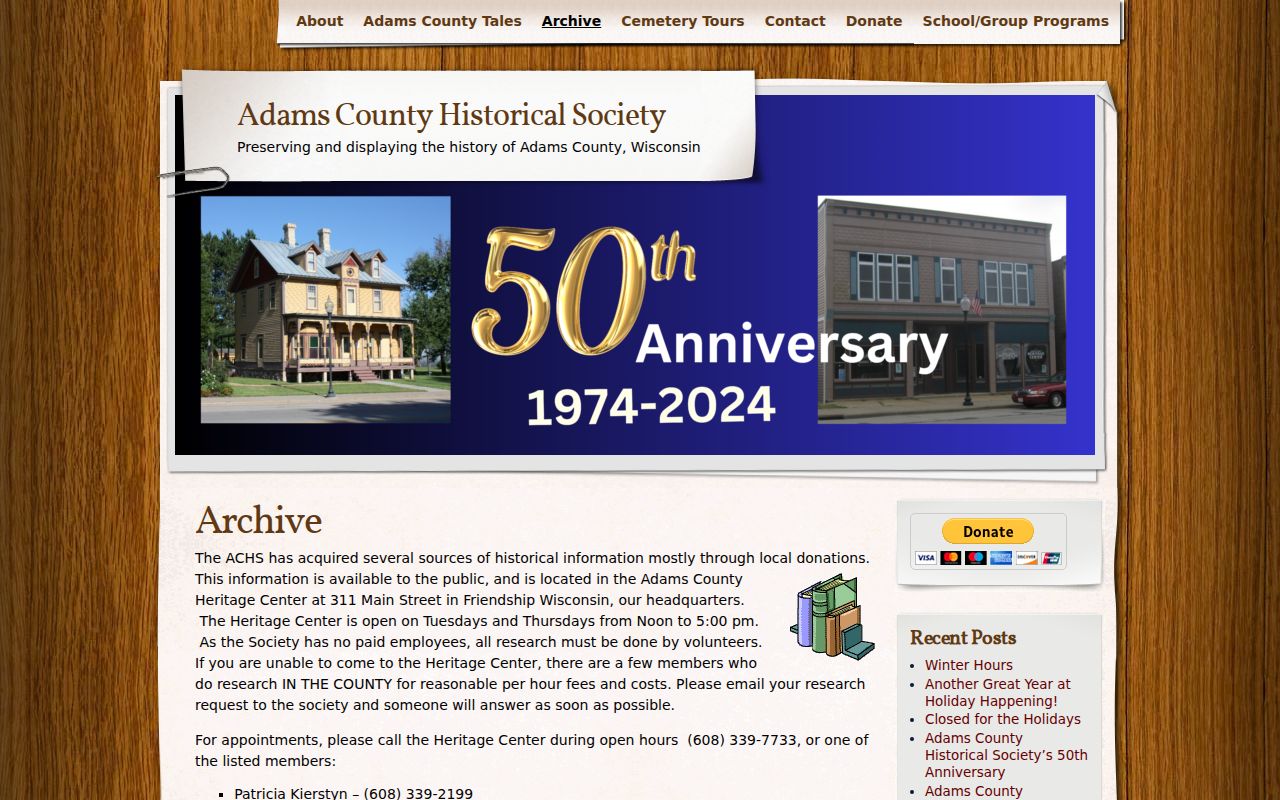
Use the archive to build historical context. Then verify the transfer in the official deed chain.
Limits of an Adams County Former-Owner Search
A former-owner search in Adams County can stall for several reasons. The deed index may simply end. A family name can change through marriage. Land descriptions shift as parcels split or merge. Some transfers also move through an estate, which leaves a thinner paper trail than a standard deed. Know these limits before you dig.
Lawful use. Adams County former-owner records support house history and property diligence. Do not use a name or address to track, threaten, or harass a living person.